

-
Services
Core ProgrammesScotland's Mental Health First Aid ASIST MHFA EnglandAlso AvailableGroupwork & Facilitation Skills SMHFA: What Next? Peer Feedback Workshop
- Public Courses
- Success Stories
- About
- Resources


Opinions from
the room.
Writing from the training room. On Mental Health First Aid, suicide prevention, facilitation, and the craft of doing this work well.
- What I've noticed after 50+ Mental Health First Aid courses.Feb 2026
- The best wellbeing strategy: just be a good place to work.Feb 2026
- Five thoughts from my first year as an ASIST trainer.Nov 2025
- Different cultures, same mission: bringing ASIST to educators in Hong Kong.Sep 2025
- 3 unexpected lessons from my ASIST delivery with Thrive Domestic Abuse Services.Apr 2025
- Back to Shetland: building a network of noticers in the isles.Oct 2024
- SMHFA training: a whole team approach.Mar 2024
- 5 thoughts on the efficacy of Mental Health First Aid articles.Sep 2023
There's been a nagging feeling of unease sitting with me for a while now about Mental Health First Aid. Not a dramatic crisis, more like that quiet background hum you can't quite place at first.
Nobody queues for
a first aider.
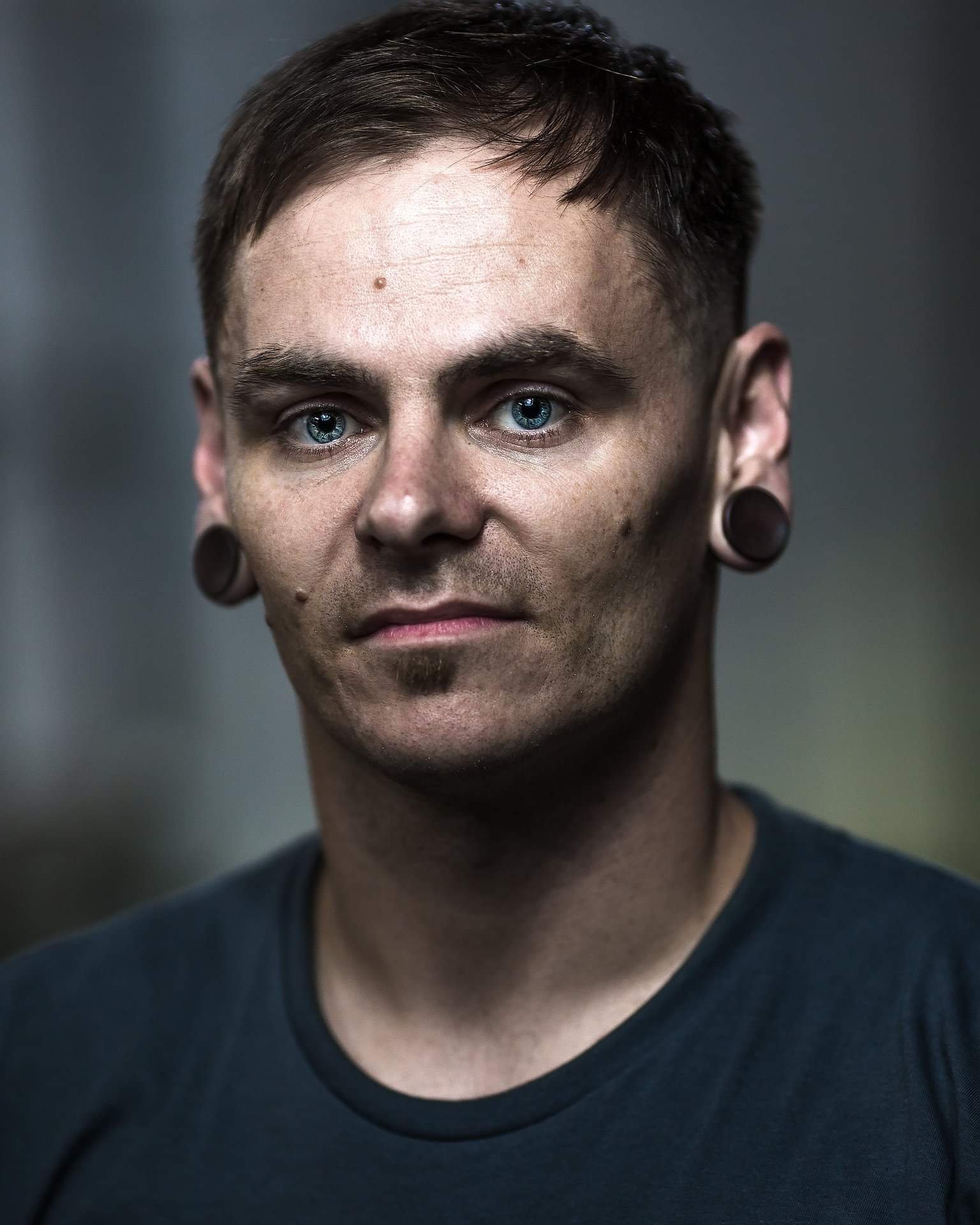
There's been a nagging feeling of unease sitting with me for a while now about Mental Health First Aid. Not a dramatic crisis, more like that quiet background hum you can't quite place at first. You deliver a course, it goes well, the learners get something real from it, you feel good about the work. But then you hear about how an organisation is deploying their MHFAiders, or you see another new product launch, or you get asked to deliver something that doesn't quite sit right, and the hum gets a little louder. The thing you signed up to deliver is slowly becoming something else and you can't quite put your finger on when it started.
I'd bet good money I'm not the only trainer feeling it.
I want to be clear about what this is and what it isn't before I go any further. I love delivering MHFA training. I deliver both Scotland's MHFA and MHFA England and I have genuine respect for the people and organisations behind both programmes. I'm not involved in strategy or policy level work by choice and I'm not party to any wider decision making, which means I could easily be missing context that would change my read on some of this. These are observations from the ground, from one trainer who has delivered a lot of courses. I'm not writing this to criticise the organisations that license and develop the programme. I'm writing it because I think we need an honest conversation with each other, as trainers, about where we think this is heading.
The best analogy I can find for what I'm observing isn't a mental health one. It's Crocs.
Crocs were foam clogs, ugly on purpose, made for gardening and messing about on boats. They did one thing and people loved them for it. Then someone decided they should also make wedges, loafers, high heels and cowboy boots. Sales tanked and the brand nearly died before they went back to the original clog, leaned into what they actually were, and came back stronger. The Swiss Army Knife did something similar, starting as a pocketknife with a few genuinely useful tools and ending up with 80-function models that had USB drives and laser pointers. Nobody could find the blade.
Simple ideas get stretched when they become successful. The stretching usually comes from good intentions. And somewhere along the way the thing that made them work quietly gets lost.
I think this is happening to Mental Health First Aid and I think it's worth saying out loud.
What MHFA was designed to be
MHFA International describe the programme as training that equips people with the knowledge, skills and confidence to support someone experiencing a mental health problem or a crisis. The Scottish course materials are even more direct: the course does not train people to be mental health workers, it offers basic general information, and the help given is only until other suitable or professional help can be found.
The five aims of Mental Health First Aid are to preserve life, to provide initial help, to prevent the problem getting worse, to promote recovery of good mental health, and to provide comfort. Read those and compare them to the aims of physical first aid. They're essentially the same, and that's the whole point. MHFA is crisis response. It's what you do in the moment, with the knowledge you have, until someone more qualified takes over. The whole thing is held together by ALGEE, a simple action plan that sets the MHFAider's role in a deliberately narrow space.
That narrowness isn't a limitation. It's the entire design. And I think we've started to forget that.
Nobody expects the person who did a first aid at work course to run a triage service or manage ongoing patient care. The role is bounded by design and the boundary is the point.
Two models, two different problems
I deliver in Scotland and in England and the two systems are quite different, which is worth understanding because they each illustrate something about what happens when a simple idea meets the real world pressures of scale and sustainability.
SMHFA is licensed and delivered through a small health improvement team at Public Health Scotland, funded by the Scottish Government. That makes the training genuinely accessible, often cheap or free, which is a real strength. Scotland was one of the first countries to adopt the programme and a lot of the original trainers are still active. The flip side is that the team is small, development budget is limited, there's one course, and it's had maybe one or two updates since I trained in 2018.
But here's the thing. Because there hasn't been budget or appetite to expand and iterate, the essence of the programme hasn't been diluted. The same constraint that stopped it evolving is the thing that stopped it drifting. There's something almost accidentally pure about the Scottish model, and I say that as someone who is very aware of its limitations.
MHFA England is a community interest company. Trainers pay yearly membership, pay for materials, and contribute to a community that can genuinely influence the direction of the programme. Materials are regularly updated, informed by the people delivering them, and there's a financial stake in the whole thing that arguably drives trainer quality. These are genuine strengths. But the CIC model also creates a quiet incentive toward growth, and grow it has. There are now somewhere around five to ten different courses, repackaged and tailored for different audiences, and the whole thing has become increasingly workplace focused. Each product is justifiable on its own terms. Collectively they start to blur what MHFA actually is.
Scotland is frozen but accidentally preserved. England is responsive but sprawling. Two different structural pressures producing two different models. I want to be clear that I'm offering these as observations, not verdicts, and that both organisations are doing genuinely important work.
What the drift looks like in practice
This is where the unease really lives, in the specific things I've seen and heard about happening in organisations.
I know of a government organisation that set up an email referral service for people to contact their Mental Health First Aiders. The MHFAiders have a queue.
Nobody queues for a first aider. If you're queueing, you've built a mental health helpline and called it something else.
Many organisations put up posters naming their MHFAiders with photos and contact details. The intention is good, visibility and accessibility are real values, and normalising the conversation matters. But it quietly reframes the MHFAider from a trained colleague who might help in a moment into a designated mental health resource with a specific organisational function. That shift changes what's expected of them and it changes the weight they carry, in ways that neither the MHFAider nor the person reaching out necessarily signed up for.
Bigger organisations sometimes build MHFAider networks with team leaders and internal reporting structures. Again the intention is usually to make MHFAiders feel supported and connected, which is a good instinct. But what gets built is a parallel mental health infrastructure inside the organisation, with responsibilities, meetings, hierarchies and an ongoing role that a two day training course was never designed to prepare anyone for. The question that rarely gets asked is who's looking after the MHFAiders while they carry all of that.
In England at least, and probably across the UK, a whole economy of businesses has grown up around the gap that over-deployment creates. MHFAider hubs, reporting platforms, ongoing supervision services. These aren't the villain in this story. But they do make the drift self-reinforcing. Over-deployment creates overwhelmed MHFAiders, which creates demand for support products, which normalises the over-deployment, and the cycle continues.
The frustrating thing about almost all of this is that the intentions behind it are usually good. Nobody is being reckless or cynical. But good intention without a clear understanding of what MHFA actually is leads you quietly and steadily away from the thing that makes it work.
What it looks like when it works
It's important to talk about good practice because it tells you something about the strength of the original design when it's given the space to do its job properly.
I've seen organisations like Shetland Youth Services, the School of Geosciences at the University of Edinburgh, and Indigo Childcare Group in Glasgow train at scale, getting as close as possible to everyone in the organisation having done the course. When that happens something really interesting shifts. MHFA stops being a designated role and becomes a shared skill. Nobody needs a poster or a lanyard. People just know things, they can notice changes in a colleague, they can have a better conversation, and stigma drops not because someone launched a wellbeing initiative but because the people in the organisation quietly changed.
That's how first aid is supposed to work in an ideal world. Everyone knows CPR and nobody is the designated CPR person.
I've seen organisations frame MHFA as a safeguarding matter, treating it the same way they'd treat training people to spot abuse or harassment. When you put that lens on it, MHFA stays completely in its lane. It's about watching for signs of crisis or danger, recognising what you're seeing, and knowing what to do next. Nobody expects the person who did safeguarding training to then run a support service or manage a caseload. They recognise, respond, and refer. That's ALGEE.
And I've seen organisations where the leadership does the training first, right to the top. When the people making decisions about how MHFAiders will be used have actually sat with ALGEE and understood the five aims from the inside, they tend not to overstep. They don't build referral queues because they know instinctively that's not what this is.
Holding up the mirror for trainers
As trainers it would be easy to look at all of this and point the finger entirely at organisations and licence holders. Some of the drift is definitely happening above us and beyond our direct control. But we're part of this ecosystem too and I think we owe it to the programme and to each other to look at ourselves honestly.
Are we holding the line? When an organisation asks us for something that moves beyond what MHFA was designed to do, do we have the confidence to say that's not what this is for? Or do we say yes because the work is there and the invoice matters? I'm asking this of myself as much as anyone. The pull to agree when a client wants a shorter version or a bolt-on module or something more tailored to their specific context is real, especially when you're freelance and the thought of steady work is genuinely seductive. We have the advantage of being bound by licence not to redesign the training, so we can say no that way, but then we take it to the licence holder and ask for a new product, or go looking for another organisation's training we can deliver alongside it. Every time we say yes to something that moves away from the core principles, we're part of the drift.
We also need to be honest about who we are. A lot of us aren't mental health experts and that's not a weakness, it's actually part of the point.
I tell my learners I'm proudly not an expert because if the person delivering the training can say that openly and mean it, everyone in the room has permission to feel like this is genuinely for them. That's a stigma-busting moment in itself. But it also means we've got no business designing wellbeing strategies or positioning ourselves as something we're not. Our expertise is in delivering the training faithfully and well and that is a real and valuable skill without needing to stretch it into something else.
And we need to pay attention to the stories we tell each other. When trainers talk about the moments that mattered, the ones shared at conferences and over drinks, they're almost always about crisis response. Someone noticed something in a colleague. Someone stayed calm when it counted. Someone used ALGEE and got a person to the right help at the right time. Nobody's best story is about chairing their MHFAider network meeting. Those crisis stories are the proof that the original model works and they're also the compass. If what you're delivering doesn't map back to those five aims, it's worth asking yourself honestly whether you've drifted and whether you're okay with that.
In a previous article I said let's keep working together to be critical about what we do. This is me trying to do exactly that. Not to pull the programme down but because I think it's good enough and important enough to deserve that kind of honesty.
MHFA doesn't need to be more than it is. It needs to be what it is, done well, at scale, with confidence in its own limits.
That quiet hum I mentioned at the start? I think it's telling us something worth listening to.
If you're reading this and you work with me, or you're thinking about it, I want to be straightforward with you. None of this is a criticism of the people trying to do the right thing by their staff. In my experience that's almost everyone. But doing the right thing and doing the right thing well are sometimes different, and part of what I bring to this work is an honest conversation about what MHFA can and can't do. I'll always come to that conversation with care. I'll also come to it with a point of view, because I think that's more useful to you than someone who just says yes. If this article made you think, I'd love to talk.
I think and talk much better than I write. I've been saying versions of this out loud for months, in cars, in conversations, to anyone who'd listen. Getting it onto a page in a way that makes sense to someone who isn't inside my head is a different skill and honestly not one of my stronger ones. I used Claude to help me organise my thoughts and structure the argument. The opinions are mine. The rambling first draft was also mine. Claude just helped me find the shape of it.
Over 50 courses across different sectors, organisations, and communities. That breadth has shaped how I think about Mental Health First Aid and what actually makes it effective.
What I've noticed after
50+ courses.
I deliver Mental Health First Aid in both England and Scotland, and I think that gives me a slightly unusual perspective. The two programmes share the same intention, but the structure, emphasis, and delivery are different enough in each country that you really start to see what makes an impact and where learning lands differently for people.
Over 50 plus courses, across different sectors, organisations, and communities, I've experienced a level of variety that's hard to match. That breadth has shaped how I think about Mental Health First Aid and what actually makes it effective in the real world. These are some of the things I've noticed most.
The stories come in quickly
One of the most consistent things is how fast people start using the skills. Often within days of the course, I'll get an email or a message that starts with something like, "I didn't expect to need this so soon, but..."
Someone has checked in on a colleague. Someone has stayed with a difficult conversation instead of avoiding it. Someone has asked a direct question with care and confidence, including about suicide.
That tells me people leave feeling able to act. They don't leave with a fear of saying the wrong thing and they trust themselves enough to show up, and that makes a real difference.
Most people already have the skills
A big myth about Mental Health First Aid is that it's about giving people brand new abilities. In reality, most participants already have the human conversation skills that matter. They can listen, they notice when something feels off, and they care about the people around them.
What the course really does is give structure to those instincts. We frame them using ALGEE, we slow things down, and we help people practise responding in a way that feels safe and intentional. Over and over again, people realise they're not starting from scratch. They're building confidence in skills they already had.
That shift, from "I'm not able to do this" to "I actually can already do this," is huge.
Culture change happens when enough people are trained
Training one or two people can help individuals. Training lots of people changes culture.
I've worked with organisations where I've trained over 200 staff, and the feedback is consistent. Conversations about mental health become more normal and people step in earlier, not just at crisis point. Support starts to happen at a basic human level, not only through formal processes or policies.
It's not about everyone becoming a therapist. It's about creating an environment where people feel noticed, supported, and less alone. That's where real, sustainable change happens and it makes workplaces better overall.
Emotional safety matters, but it isn't the same as emotional avoidance
One thing I'm very intentional about is not using the word "triggered." For some people, that word has evolved its meaning and has become shorthand for experiencing any kind of discomfort, stress, or emotion. A lot of my learners are terrified about triggering someone. That's not helpful in a learning space that's dealing with real life and real human experiences.
My aim is that people feel safe enough to be emotional on the course. That doesn't mean pushing people to share, overwhelming them, or ignoring the impact of difficult material. It means being clear about what we're covering, offering choice and autonomy, and holding emotional moments with care rather than rushing to shut them down.
There's a balance here. If we try to protect people from any emotional response at all, the course loses depth and honesty. If we ignore emotional impact, we risk doing harm. Good facilitation sits in the middle.
The trainer makes the course
The materials matter. The evidence base matters. The regulation matters. They ensure a baseline of quality and consistency.
But after 50 plus courses and working alongside some absolutely incredible trainers, I'm convinced that the trainer makes the difference between information and impact.
A good trainer connects the material to real people, real workplaces, and real lives. They read the room, create psychological safety, and know when to slow things down or go deeper. They make it possible to have frank conversations without people feeling exposed or unsafe. That's where the learning really lands and where the magic happens.
Wellbeing strategies shouldn't be a toolkit to help people tolerate a bad job or a bad culture. They should exist alongside a will to make the jobs better in the first place.
The best wellbeing strategy:
just be a good place to work.
Every workplace has a wellbeing strategy and should have. I'm part of the economy and work that supports these strategies. We've got training like MHFA and ASIST on the books. Meditation sessions. Wellness challenges. Apps to track your mood.
But wellbeing strategies shouldn't be a toolkit to help people tolerate a bad job or a bad culture. They should exist alongside a will to be making the jobs better in the first place.
More often than not, the experience I hear about on my courses is that there are fundamental challenges in the culture, systems and people in the workplace itself, and that's something I've experienced personally. I've seen that one toxic person's behaviour and inaction from the leaders can bring the wellbeing of the workforce to its knees.
I'm also proud to say that I've seen and helped build the good side of this: In my last leadership role when we focused on building a happy, fulfilled, flexible workforce then there wasn't really any wellbeing initiatives needed at all. We dealt with any workplace stress before and as it emerged, we used our MHFA and ASIST tools if there was a crisis, and we had open, honest candour about where our personal lives might impact work.
When we talk about wellbeing it should be a conversation about what's happening day to day
If someone is feeling constantly overloaded, unsupported, or burnt out, it could be that one of three things is happening:
They're genuinely under too much pressure. Not enough time, not enough money and hearing that all the time when they ask for help. The systems around them are creating more stress than the work itself. Tech that doesn't work and never gets fixed, meetings that could be emails, waiting months on invoices to be paid (hello freelancers, I see you). Or their personal lives are highly stressful or a major life event has occurred and their workplace doesn't recognise that or support it, and they don't feel safe to share it.
No amount of wellbeing initiatives will tackle issues that are deeper in the system. Make a good workplace and you'll have good, happy staff.
From my experience working with thousands of staff in different sectors, when work is actually a good place to be, people talk about: reasonable workloads, being trusted to get the job done, managers who don't swing between unpredictable and oblivious, feedback that feels useful not punitive, and space to build a culture together.
None of those things require gimmicks. They require thought, consistency, persistence and a bit of courage from leadership.
MHFA and ASIST are not the strategy, they're the safety net
I want to be clear: training people to respond to crisis is important. Really important. I've built my career on it.
MHFA teaches empathy and practical skills to have conversations with your team and peers. ASIST builds confidence to step in when someone's thinking about suicide. Those are not trivial things. But they are responses to crisis.
If we're training people in crisis response because workplaces are regularly overwhelming, then we're treating the symptom, not the cause.
Delivering ASIST has deepened my respect for the course, strengthened my skills as a trainer, and reminded me how powerful suicide prevention training can be.
Five thoughts from my first year
as an ASIST trainer.
It's been a year since I completed my LivingWorks ASIST Training for Trainers, and it's been one of the most rewarding and stretching experiences of my career. Delivering ASIST has deepened my respect for the course, strengthened my skills as a trainer, and reminded me how powerful suicide prevention training can be. Here are five reflections from my first year.
1. There's nothing to it but to do it (with good notes)
I remember how much energy went into preparing for my first delivery, turning a huge manual into clear, personal notes that made sense to me. Those notes came through on the day and they've made more sense with every delivery. With six courses now behind me, I can feel the flow coming naturally. The ASIST language feels embedded, and I'm more confident balancing the course structure and content with my own voice.
My best advice for new trainers? Make your notes work for you. They don't just help you remember what's next, they free you to be fully present with your group.
2. Partnership makes the difference
As someone who learns through working with people, I knew co-delivery would be central to improving at delivering ASIST. I've now worked with six different trainers, each bringing their own rhythm and energy. The beauty of ASIST is how the 99% consistency of the materials blends with 1% of personal flavour. Every trainer adds something small but meaningful, and there's loads to learn and borrow from that. Preparing and debriefing together before and after each course has been just as valuable as the delivery itself.
3. The balance between structure and flexibility
One of the hardest but most rewarding lessons has been learning to stay true to the materials while being fully present with the people in front of me. I knew this would be a consideration for me where I've had a lot of freedom before. I'm pleased to say I've worked hard at this, and it is made easier by a strong belief that the ASIST training is near to perfect as it is. The ASIST process is so well designed that it almost carries itself. By trusting the structure, I can relax into the delivery and bring my own authenticity without drifting off course.
4. The emotional weight and the privilege of this work
ASIST asks a lot of both learners and trainers. It's deeply personal and can be emotional at times, but those moments of honesty and courage are what make the course so powerful. Every group teaches me something new. Watching learners share their stories and seeing the shift that happens when they connect with each other and to the PAL model is humbling.
Between the two days, I always take time to reset, to do something that brings me some distraction from the work before stepping in again. Working with compassionate co-trainers makes all the difference too.
5. The importance of accurate use of materials
ASIST has been evolving since 1983 and I like to joke that so have I. After forty years of refinement, the course simply works. Even as an experienced trainer, following the materials keeps me sharp. It gets me out of old habits and reminds me how different learning styles can come together in one powerful process.
Each delivery deepens my understanding of the PAL model. There's so much nuance in it, and each course reveals something new. My advice to new trainers? Stick to the script, and trust the process. Your voice will still shine through.
This November I will be travelling to Hong Kong to deliver ASIST. Suicide prevention is never a one-way conversation and as a trainer I learn so much from everyone who attends.
Different cultures,
same mission.
This November I will be travelling to Hong Kong to deliver LivingWorks Applied Suicide Intervention Skills Training (ASIST). This upcoming course is the result of reconnecting with Justin Hardman at 21st Century Learning and reaching out to Sandy Sinn, who is an experienced ASIST trainer based in Hong Kong. I am thrilled that together we have been able to make this collaboration happen. It feels like a natural continuation of my past connections with Hong Kong, but with an even deeper sense of purpose, and it has some real potential after this first course.
The ASIST course will focus on bringing together educators, although the course will be open for anyone to attend. I am genuinely excited for this opportunity, not only to share the ASIST model but also to learn from those in the room. Suicide prevention is never a one-way conversation and as an ASIST trainer I learn so much from everyone who attends.
A professional connection to Hong Kong
I first visited Hong Kong in 2018 and 2019 for the PHASE conference, where I worked with PE teachers from international schools across the Asia-Pacific region. Back then I was delivering Parkour education with Parkour for Schools, not mental health training, but what struck me was the passion and care those teachers had for the wellbeing of their students. I felt a real affinity with them. Even though the context was physical education, the qualities I saw in those educators translate directly into suicide prevention. Their commitment to young people's growth and wellbeing is exactly what ASIST is designed to nurture.
Why educators matter
Throughout my career, whether as a high school youth worker, a Parkour coach, or supporting young people with the Prince's Trust and See Me, I have seen the power that educators hold. Teachers and school staff are in such a unique position. They often notice changes or signals that others might miss, and young people look to them as role models in a way that feels very different from relationships with parents, carers or partners. There is something special in that dynamic, and it can become a lifeline when someone is struggling.
I want ASIST to help nurture this instinct. What ASIST does is give educators the structure and confidence to turn that care into safety and hope for a young person thinking about suicide.
Stigma first
I am well aware that mental health stigma remains a formidable barrier to accessing help. In Scotland over half of people with mental health issues report discrimination, and among young people, many won't even reach out because they feel judged or unheard. We know that stigma plays its own part in access to help in Hong Kong too, and that tells us we must pair stigma-work as part of wider suicide prevention programmes.
I'll be bringing with me my previous experience working at See Me, Scotland's national programme to tackle mental health stigma. As Education and Young People's Officer, I supported schools and young people to challenge stigma and create inclusive environments.
Why ASIST stands out
ASIST is a cut above other suicide prevention programmes. It is highly participatory, emotionally connected and designed to feel personal to each learner. The moment when participants move from reflecting on their own insights about suicide into practising real conversations is always powerful. Watching people connect their feelings and understanding to the PAL model, and realising they can support someone through thoughts of suicide, is an incredible lightbulb moment every time.
Working across cultures
I have been fortunate to work with young people in the Caribbean, Europe and the United States, and through PHASE I gained some limited but valuable experience in Asia too. Every culture has its own unique context, and I always try to recognise my own ignorance before stepping into a new environment. What I bring is openness, curiosity, and the belief that there are universal passions that connect us all. Suicide prevention is one of those passions.
Working alongside Sandy makes this even more meaningful. Sandy knows Hong Kong, she can share the existing community connections and network of safety that exists in the region. We will both bring our own stories and perspectives, but what really matters is the united message. Suicide prevention matters in every culture. Our educators may not always share the lived experiences of their students, but they can still help. They can still listen, they can still build safety, and they can still connect a young person to hope.
My session at Thrive Domestic Abuse Services in Port Talbot gave me insights I hadn't expected, and deepened my understanding of the links between suicide prevention and domestic abuse.
3 unexpected lessons from
Thrive Domestic Abuse Services.
Delivering ASIST is always a learning experience, but my recent session at Thrive Domestic Abuse Services in Port Talbot gave me insights I hadn't expected. Thrive is a vital organisation supporting women, children, and young people affected by domestic abuse, not just providing crisis support but also challenging the systems that allow abuse to continue. Working with them deepened my understanding of the links between suicide prevention and domestic abuse, and as a man, I left with a lot to think about.
1. The link between domestic abuse and suicide is deeper than I realised
I've always understood that domestic abuse can have a serious impact on mental health, but this training reinforced just how closely it connects to suicide risk. Many survivors live with years of control, fear, and isolation, factors that can leave them feeling hopeless. What stood out to me was the fact that there's now a review into domestic homicide investigations, exploring whether some of the suicides by abuse victims should be investigated as domestic homicide. That hit hard.
It expanded the way I think about accountability, how abusers can create conditions where death feels like the only option. This isn't just about direct violence; it's about the long-term psychological toll of coercion and control.
2. Conversations about domestic abuse and suicide share striking similarities
One of the things that really stood out was how, as a caregiver, conversations about domestic abuse and suicide can be very similar in terms of approach. Both require careful listening, an awareness of risk, and a focus on safety. In both cases, people may not disclose everything at once, so building trust is essential.
I also noticed how both conversations challenge the instinct to jump in and fix things. Instead of offering solutions, the role is to create space for the person to explore their options safely. That's something ASIST does really well, it's about empowerment, not control. It reinforced the importance of trauma-informed practice, not just in ASIST but in all forms of support work.
3. Being a man in a women's aid space gave me a lot to think about
Before this course, I hadn't even considered that being a man in this space might be a challenge, for me or more importantly for others. That, in itself, was a realisation. It made me reflect on my own privilege, on how I've never had to question whether I feel safe or understood in a professional setting.
I never felt unwelcome, far from it, but I did become more aware of my presence in the building. It made me think about how the women in the space might experience training differently and about the importance of being mindful of that. I am incredibly grateful to be granted the trust to work with the learners in what is a protected space.
This has also helped me to reinforce my thinking about how essential it is for men to engage with this work, not just by supporting women's aid organisations but by actively challenging harmful attitudes, blind spots and behaviours in our own spaces.
I'm hugely grateful to Katy, Amy, and Thrive for welcoming me into their space and for the work they do every day. Senior members of organisations must have buy in to training like ASIST and offer their staff full trust to deliver. I also want to acknowledge the learners as the most important part of my experience. ASIST is an intense course, it requires people to engage deeply with difficult topics and push themselves outside their comfort zone. The effort and focus in the room were inspiring, and I'm always grateful to be part of that learning process.
I lived in Shetland from 2014 to 2017, so returning always feels a bit like coming home. After delivering for Shetland Sport & Leisure, my heart is full and my mind is buzzing.
Back to Shetland: building a
network of noticers.
For those who don't know, I lived in Shetland from 2014 to 2017, so returning to the islands in August as always feels a bit like coming home. This was my second time working in Shetland this year and the trip was extra special because I had my whole family with me, my wife, our one-year-old, and even the dog. It was the first time my little one got to experience Shetland and watching them discover the sea and meet so many new faces was incredible. The dog hadn't been back in seven years but seemed to remember everything, running along the beaches like no time had passed.
After delivering Mental Health First Aid for Shetland Sport & Leisure and their volunteers on this trip, my heart is full, and my mind is buzzing with everything that was achieved by the learners. I also reconnected with old friends, colleagues, and some of the young people (now adults with their own families!) that I used to work with as a youth worker.
Taking a local approach
One of the things I love about Shetland is how tight-knit the community is. Everyone knows everyone, and there's a real sense of looking out for each other. Because I've lived here before, I could take a local approach with the training, addressing the specific challenges the community faces. It made a massive difference that folks knew I wasn't just another trainer swooping in from the mainland. I'm someone who understands Shetland life, who's shared a pint at the pub, and who's seen the peerie bairns from the school out on their walks in all weather.
Facing the tough stuff head-on
This year has been tough for Shetland, with some tragic losses due to suicide. Mental health is front and centre in everyone's minds, and I was beyond impressed with how passionately the participants engaged with the training. We tackled some heavy topics, but we also made space for laughter, which is so important when dealing with something as serious as mental health. That positivity of the learners shone through and will ripple out into their communities.
Creating a network of noticers
Over the course of my January, July and August trips, I've trained over 60 people in mental health first aid. These amazing folks are now part of a growing network of noticers, people who can spot the early signs of distress or crisis and help steer someone toward the support they need. This network isn't just about looking out for others; it's also about supporting each other. I've already heard stories of how they've used the training and backed each other up when their own worries felt overwhelming.
It's incredible to see how quickly this community has embraced the idea of mental health first aid and started putting it into practice.
Every time I go to Shetland I'll meet someone who says "How long are you home for?" and that feeling of being at home in Shetland couldn't be truer for me right now. And I can't wait to see how this network of noticers continues to grow and make a difference in the lives of those in the isles.
Any good training about caring for people should create culture change in a community. I was so pleased to start my year in Shetland where the whole staff team undertook Scotland's Mental Health First Aid training.
SMHFA training:
a whole team approach.
Any good training about caring for people should create culture change in a community. A community can be any gathering of people of any size that gather around a common interest or principle: a football team, a chess club, all of the world's Taylor Swift fans, or in this case a workplace with a firm mission to make change for the people they serve.
I was so pleased to start off my year working for a week in Shetland where the whole staff team of Shetland Youth & Employability Services and some partners undertook Scotland's Mental Health First Aid training. I had a fantastic week training over 30 staff in SMHFA and heard some amazing stories and contributions.
Mental Health First Aid for each individual learner is absolutely about knowledge, learning, building confidence and being first to support someone in a crisis, but I believe it's also about something more fundamental than that. It's about creating a culture of openness and a collective community of expert noticers where people can talk about their mental health and their challenges, and they are also more tuned into the signs that others may need a kind conversation and to be directed to support.
I think it's hard for one person to change a culture. However one person can influence the change at the grassroots level, and in this case that's Team Leader Martin Summers who requested training for across the team. Martin and other senior leaders made the decision to attend the course themselves, which from my perspective shows a drive for the work to matter. It's not uncommon for senior staff to book training for others but end up missing the knowledge themselves. Senior staff attending training makes sure that the experience of the course is understood at every level.
"I've had a catch up with a staff member on the training who had to have the conversation about suicidal thoughts with someone and the training has given them the confidence to deal with that in a way they weren't sure they would have dealt with it as effectively before."
"We have seen a genuine boost in the team's confidence and ability in dealing with difficult conversations around mental health, not only with clients, but also with each other. How the training was facilitated meant it gave staff across multiple teams and services the chance to spend time with each other in a setting that allowed understanding and trust to be built and has resulted in better working relationships."
It might feel like a tall order to find time and investment to train across a whole team. But if you are in a larger workplace and can think about the long game, maybe that investment will pay off with a happier, safer, more connected workforce who can serve their communities even more successfully than they do already. We all know the saying goes "it takes a village," and I'd like to see more of this approach to improve and support mental health in the workplace.
There have been a series of articles on a systematic review of MHFA outcomes. As a self-aware MHFA Evangelist, here are my thoughts on what the review actually says.
5 thoughts on the
efficacy articles.
There have been a series of articles in Personnel Today, New Scientist and others on a systematic review by Cochrane of various studies looking at the outcomes of Mental Health First Aid. As a self-aware MHFA Evangelist, here are my thoughts.
I don't think the articles really tell the story of what the review actually says, and for some reason seem to build a narrative that there's a strong indication MHFA is not effective. I know that these sites and their copywriters have a duty to lean one way on their narrative so that people share articles. Well it worked and here I am. I've taken the bait, and here are my five thoughts.
1. Absence of evidence is not evidence of absence
What is really clear from the Cochrane review is a strong, consistent message that the evidence and studies they were looking at were not reliable. They were subject to bias, low reliability and could not be used to draw a firm conclusion. In a lot of cases there was a complete absence of evidence that they could use to measure or conclude anything in regards to the outcomes they were looking at.
The answer to "is MHFA effective?" here is that we don't know, which is not to say it doesn't work. I'd want the writers of the articles to do better to make that clear.
2. "We think that it works" and "we know that it works" are not the same thing
For myself and fellow MHFA instructors we need to recognise that our belief in the impact of the course, which probably feels very strong and evident, is mostly at the micro level. We hear amazing anecdotes about the learning on the course being applied. I regularly have people come back for day two having already had "the conversation" with a loved one or colleague that they didn't need to have before.
On a personal level, knowing of this type of direct action is enough for me to advocate and promote mental health first aid. But we do need to acknowledge that a lot of people will need convincing of the strengths of the course at a more macro level and that evidence matters.
3. Our physical first aid analogy doesn't always seem to be landing yet
This is a comparison MHFA instructors use a lot to encourage people to understand they don't have to be counsellors to support someone with a mental health problem or crisis. Because of stigma and perceived complexity of mental health problems, people are often not able to approach a mental health crisis as confidently as they might a physical one. That is what Mental Health First Aid is designed to tackle.
So with this in mind, why was the main outcome of the Cochrane Review the effect of MHFA training on the mental health and wellbeing of individuals at a time point between six months and a year? Is there still a pervasive misunderstanding, even at a research level, that a first response mental health intervention should be a fix-all for someone's mental health?
4. The EE of ALGEE was not measured, and that's the most important part
The two Es in ALGEE are about encouraging someone towards professional support or other help. It's the first aid equivalent of getting them in the ambulance, to the doctor, or getting them to go home and have a Lemsip.
I often tell my learners: even if the ALG part doesn't feel like it went well, if you've hit the EE with the person you have supported then they are in a position to be supported by someone with more expertise and responsibility, and that's a win. Not one of the studies used service usage as a measure. I'd be really interested to know if workplaces or communities who have a cohort of mental health first aiders see whether help-seeking behaviour and service access improves.
5. I'll still be advocating for the course, but I'll keep my unwavering belief in check
My initial inclination about these articles was to be frustrated, angry and defensive. But that's not good enough. The people that these articles influence who don't take on MHFA might be the ones that need it most, and in my eyes it's a bigger win to change one person's perspective or challenge one person's stigma than it can be to preach to a group of the converted.
As MHFA instructors, let's keep working together to be critical about what we do. Let's do our best to listen to and understand the deniers and conscientious objectors out there and keep changing minds at the grassroots level.
My understanding of this type of research is limited. I have read the shorter versions of the Cochrane review and I realise my thoughts might be influenced by my ignorance and lack of expertise. I'm happy to be called out, or supported to learn more.
More writing, shorter takes and ongoing thoughts on LinkedIn. Follow along if you want to stay in the conversation.
Follow on LinkedIn